A Demonstration or Written Sequence: Which Helps You Start?
A demonstration or written sequence can make a first attempt easier to begin. Match the format to the skill’s visible, timed, and repeatable parts.
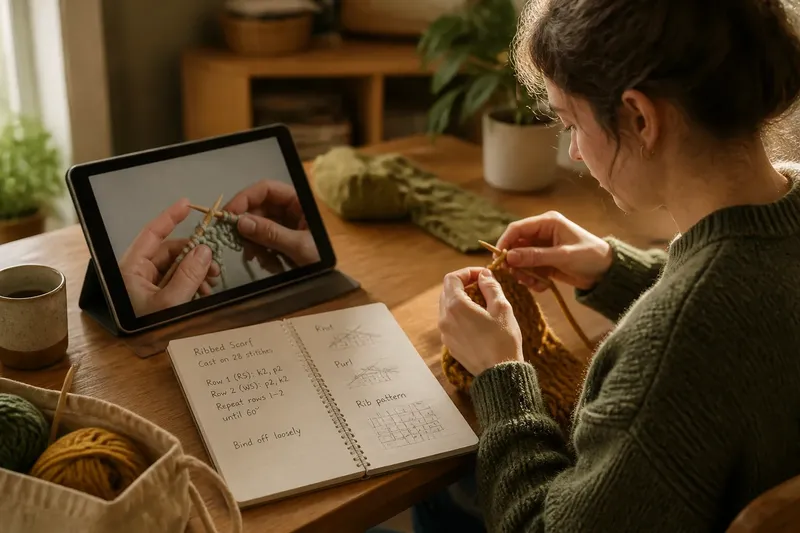
A demonstration or written sequence can make a first attempt easier to begin, but each format leaves a different kind of gap. A video of someone shaping clay shows hand movement and pressure; written steps can tell you what to prepare and what to do next without making you rewind with clay on your fingers. The useful choice depends on what is hardest to notice while you are learning.
Choose by the information the first attempt needs
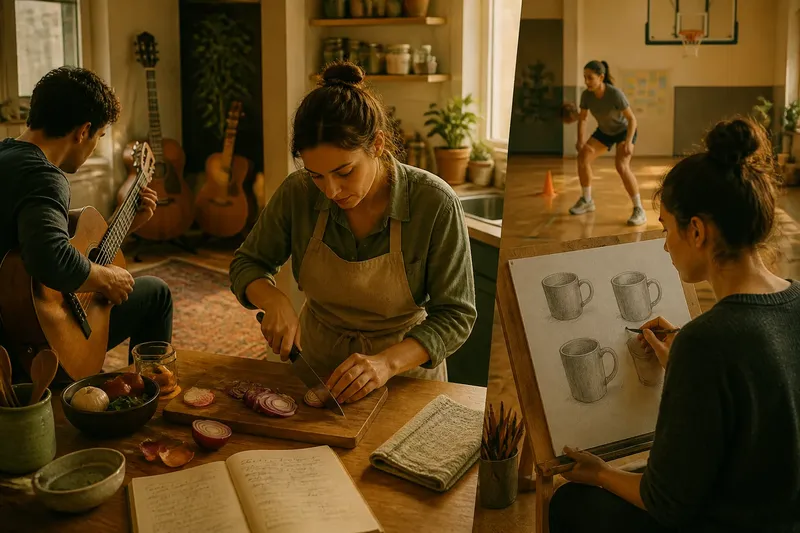
A demonstration is strongest when the important information is visible in motion: how a brush changes direction, where a hand rests on a guitar neck, or how a knife is held while chopping. It can convey timing, posture, rhythm, and the order of small movements that are awkward to describe.
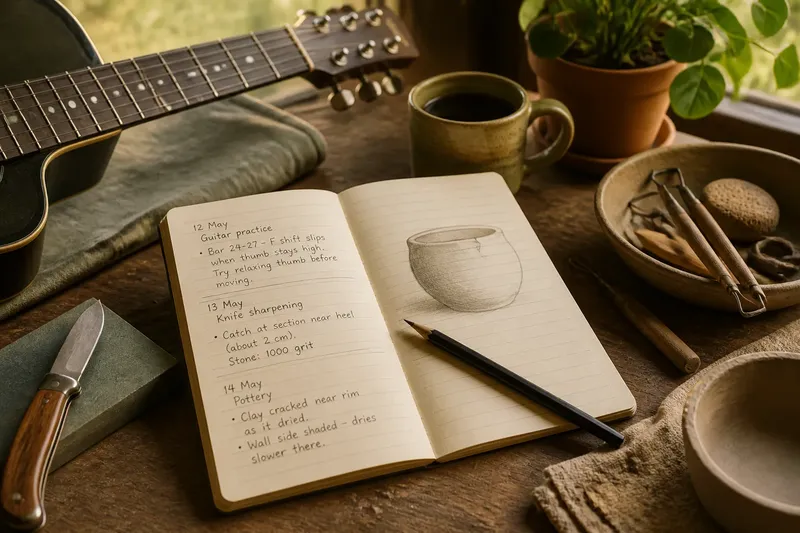
Written sequences are stronger when the task has distinct stages, conditions, or named parts. A recipe can list ingredients before the oven is hot; a sewing sequence can identify which edge to align before a seam is pinned. Text is also easy to scan for the next action when the hands are busy.
Neither format is inherently clearer. A close-up may show a movement but conceal where the tool starts. A sentence may specify the starting position but leave “gently” to do a suspicious amount of work. Treat the formats as different views of the same task, not rival claims to authority.
The first attempt goes wrong when the demonstration moves too quickly
What happens: You can follow the broad idea while watching, then lose the sequence as soon as you try it yourself. The trouble often comes from watching a continuous performance as if it were already divided into teachable pieces. Skilled movement looks tidy partly because the performer no longer has to pause and name every transition.
What to try: Before beginning, watch once for the overall shape, then replay only the segment that contains the first unfamiliar movement. Pause at a natural boundary and identify the starting position, the action, and what changes when it is done. For a drawing demonstration, that might mean noting where the pencil begins, the direction of the stroke, and which line appears afterward.
Then try only that small portion, without requiring the rest to look polished. If the video offers a slower playback speed or a camera angle that makes the hands easier to see, use it; if not, look for another demonstration that shows the movement clearly. A useful demonstration is a window onto the action, not a magic spell performed at normal speed.
Written instructions leave too much unstated when terms are vague
What happens: The sequence says “secure the piece,” “blend the edge,” or “adjust the tension,” and you cannot tell what the instruction should look or feel like. This usually means the words name a desired result without describing a visible cue. Beginners have not yet collected the private dictionary that makes such shorthand seem obvious.
What to try: Translate the vague phrase into a question you can observe: Which parts should touch? What should change? What would tell me that the action is complete? If the written source includes a diagram, caption, or example result, compare those with the instruction. If it does not, seek a demonstration of that specific action rather than restarting the entire sequence.
Imagine you are learning to fold a paper box from a short set of directions. If “crease firmly” is unclear, you might look for the point at which the folded edge stays flat when released, then continue to the next fold. That observable cue gives the instruction a practical meaning without pretending that the wording was precise all along.
Switch formats when the missing information changes
A common snag is continuing with the same format after it has stopped answering the question. If you know what comes next but cannot see how to move, switch from text to a demonstration. If you can copy the movement but keep losing the order, return to a written sequence that lays out the stages.
Use the source that answers the current question, not the one that feels more serious. For a beginner’s knitting project, a video may clarify how yarn passes around the needle, while a written pattern can keep track of which stitch comes next. The two formats can cooperate, much like a map and a street sign: one shows the route, the other helps you act at a particular point.
When switching, keep the task small enough to compare. Check whether both sources describe the same version, tools, and starting conditions. A demonstration using a different stitch or a recipe using a different pan may be useful for one movement but misleading for the whole sequence. For safety-critical work, do not improvise from an incomplete video or text; follow the relevant manufacturer instructions and seek qualified guidance where appropriate.
Why does the first attempt still feel confusing?
Should I watch the whole demonstration before trying?
Watch once to understand the overall task, then return to the part that matters for your first action. Trying to memorize every movement at once can crowd out attention to the starting position and immediate cue.
What if the written steps and demonstration disagree?
Check whether they use the same materials, version, and starting conditions before comparing their instructions. If they still conflict, choose a clear, suitable source rather than combining steps from incompatible methods.
Is a video or written sequence better for a beginner?
Use a video when motion, timing, or posture carries much of the information; use text when order, conditions, or named parts are the main challenge. Many skills contain both, so one source can answer the movement question while the other keeps the sequence straight.
How can I tell whether I need a different explanation?
If you cannot identify what to do next, the sequence may be incomplete; if you know the action but cannot see how it should happen, the demonstration may be unclear. Look for a source that fills that specific gap before repeating the whole explanation.
Make the next attempt answer one clear question
Before you begin again, name the uncertainty: the hand position, the order of actions, the point at which a movement changes, or the cue that says a stage is complete. Then choose the format that makes that information easiest to inspect. A demonstration or written sequence is useful when it gives your attention one manageable job.
Keep the first attempt modest enough that you can notice what happened. You are not trying to prove that a source was good or bad; you are checking whether it supplied the information you needed. When the question changes, let the format change with it. That is a more dependable way to start than asking one explanation to do every job.