A First Week Back to a Creative Hobby
A first week back to a creative hobby can rebuild familiarity without pressure: choose a small project, ease past practical snags, and leave a clear next step.
A first week back to a creative hobby is easier when you plan for rust, not a comeback. Choose a project that can survive a slow start, and make room for setup, forgotten details, and the possibility that your old routine no longer fits. The aim is to make the activity accessible again, not to recover a former version of yourself on schedule.
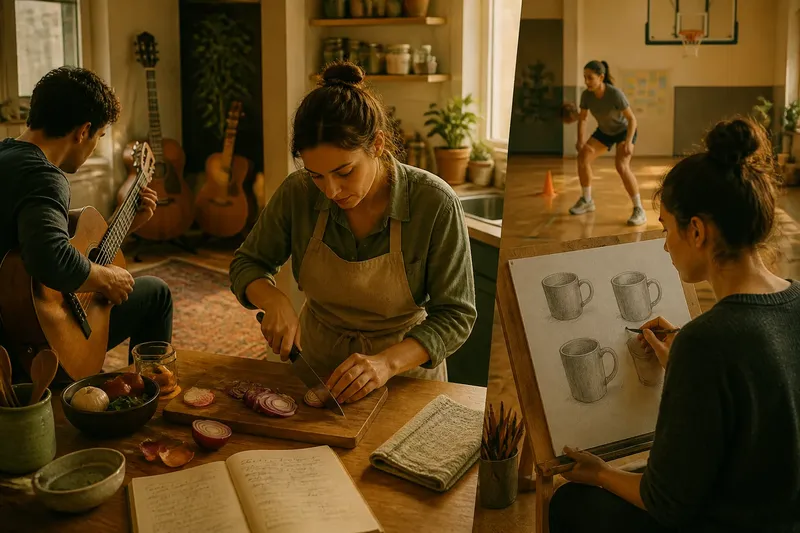
This approach suits hobbies with an observable result, such as sketching, knitting, playing an instrument, baking, or photography. Treat the week as a flexible container. Your available time and energy matter more than the calendar.
Choose a project that can absorb a slow start
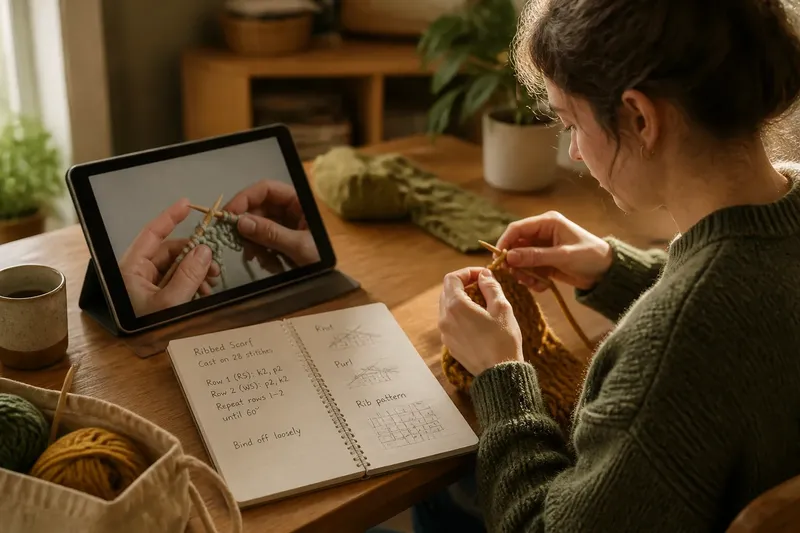
Pick a task with a visible stopping point and forgiving materials. A sketch of one mug, a small knitting swatch, a familiar passage on guitar, or a simple batch of biscuits gives you a contained place to begin. Avoid projects that require a long chain of preparation before you can make anything.
Consider what may have changed since you last practiced: your tools, workspace, instructions, or the amount of attention you can comfortably give. A plan should fit the setup you have now, not an idealized afternoon that may never arrive. Think of it like putting a bookmark in a book: the point is to make the next entry easy, not to read the whole thing in one sitting.
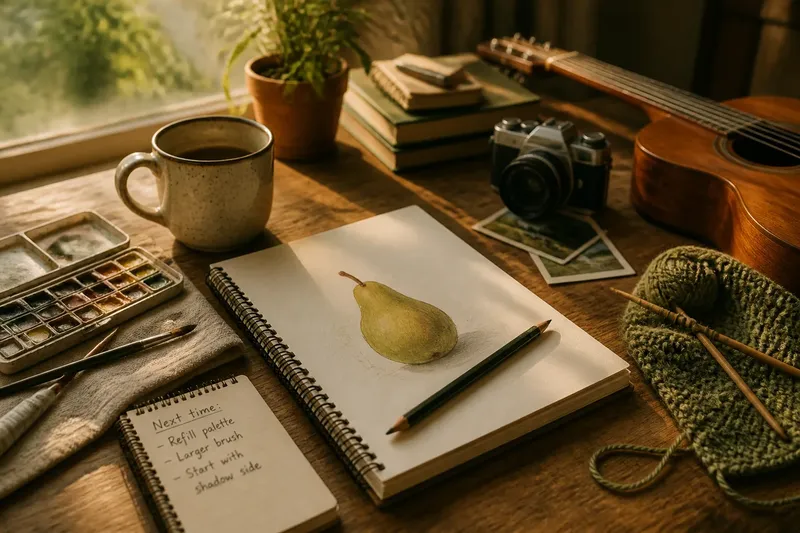
Say you return to watercolor after a long break and have a small pad, one brush, and a half-used palette. You choose a single pear rather than a detailed still life, wet the brush, and find the paint has dried in its wells. You reactivate the colors that still work and switch to a pencil sketch for the rest; the observable result is a finished study and a note to replenish the palette before the next painting.
Make setup part of the return
Use your first session to uncover obstacles, not to prove how much you remember. Lay out the materials, check that they are usable, and begin with a familiar action: tuning a guitar, sharpening a pencil, or finding the right knitting needles. If setup takes longer than expected, that is useful information about what needs attention before the next session.
Separate logistical snags from skill questions. A missing baking pan or a camera menu that has changed says little about your ability. Fix a simple obstacle if it does not consume the session; otherwise, record what is missing and choose a version of the task you can do with what is on hand.
Let the first attempt show you where the routine changed
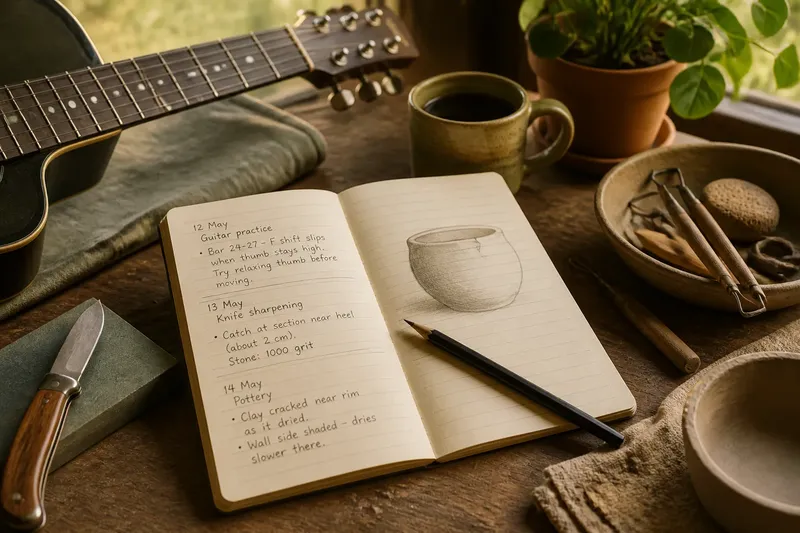
After you begin, describe what happened in plain terms. “I remembered the chord shape but paused at the transition” gives you a workable detail. “I’m bad at this now” turns one awkward moment into a sweeping verdict, which is efficient but not especially accurate.
Notice physical and practical changes as well as technique. A smaller table may make a familiar drawing awkward; a new oven may alter how you judge a recipe; a different camera may put a setting somewhere unfamiliar. Keep these conditions in view before deciding that the skill itself has disappeared.
Use feedback that answers one question
Feedback is most useful when you know what you want it to clarify. Ask a trusted person whether a melody is easy to follow, or which part of a sketch catches their eye. Avoid asking for a general verdict on your talent; it gives the other person a large, vague task and gives you little to use.
Your work can also provide feedback. A recording lets you hear a transition, a knitting swatch reveals how its edges sit, and a photograph shows where attention falls. These traces are prompts for observation, not judges. Choose one that helps answer a question you actually have.
Leave the next session easier to enter
Before putting your materials away, leave a short note about the next practical action. “Find the missing E string,” “use the larger needle,” or “start with the shaded side of the pear” is more useful than a diary of how the session felt. Put the note beside the supplies so your future self does not have to conduct an archaeological dig.
At the end of the week, look at the work and notes together. Decide whether you want to continue with the same project, make the setup easier, or pause without treating the pause as a failure. For a first week back to a creative hobby, a usable route into the next session is a better result than an ambitious plan left untouched.
What should you do if returning feels harder than expected?
What if I have forgotten the basics?
Choose one basic element and work on that directly, such as a simple stitch, a familiar scale, or a straightforward recipe. If instructions or equipment have changed, check the current directions rather than relying on memory.
Should I finish the project during the first week?
Finish it if doing so feels manageable and satisfying; otherwise, stop at a clear point. The purpose is to make the activity approachable again, not to earn a completion badge.
What if my old materials are no longer usable?
First identify what is actually unusable and what can still serve the task. If a missing or damaged item blocks your original plan, switch to a simpler version that fits your available materials or make replacing that item the next session’s first action.
How do I decide whether to keep going?
Ask whether the activity still interests you when practical snags and expectations are set aside. If it does, choose a modest next action; if it does not, you can leave the project without turning a hobby into an obligation.